







How Is Cork Harvested?
A cork harvest leaves the tree standing. Its bark grows back, its working life spans generations, and its value reaches far beyond wine. That wider market matters to the future of the forests.
Bark, not timber
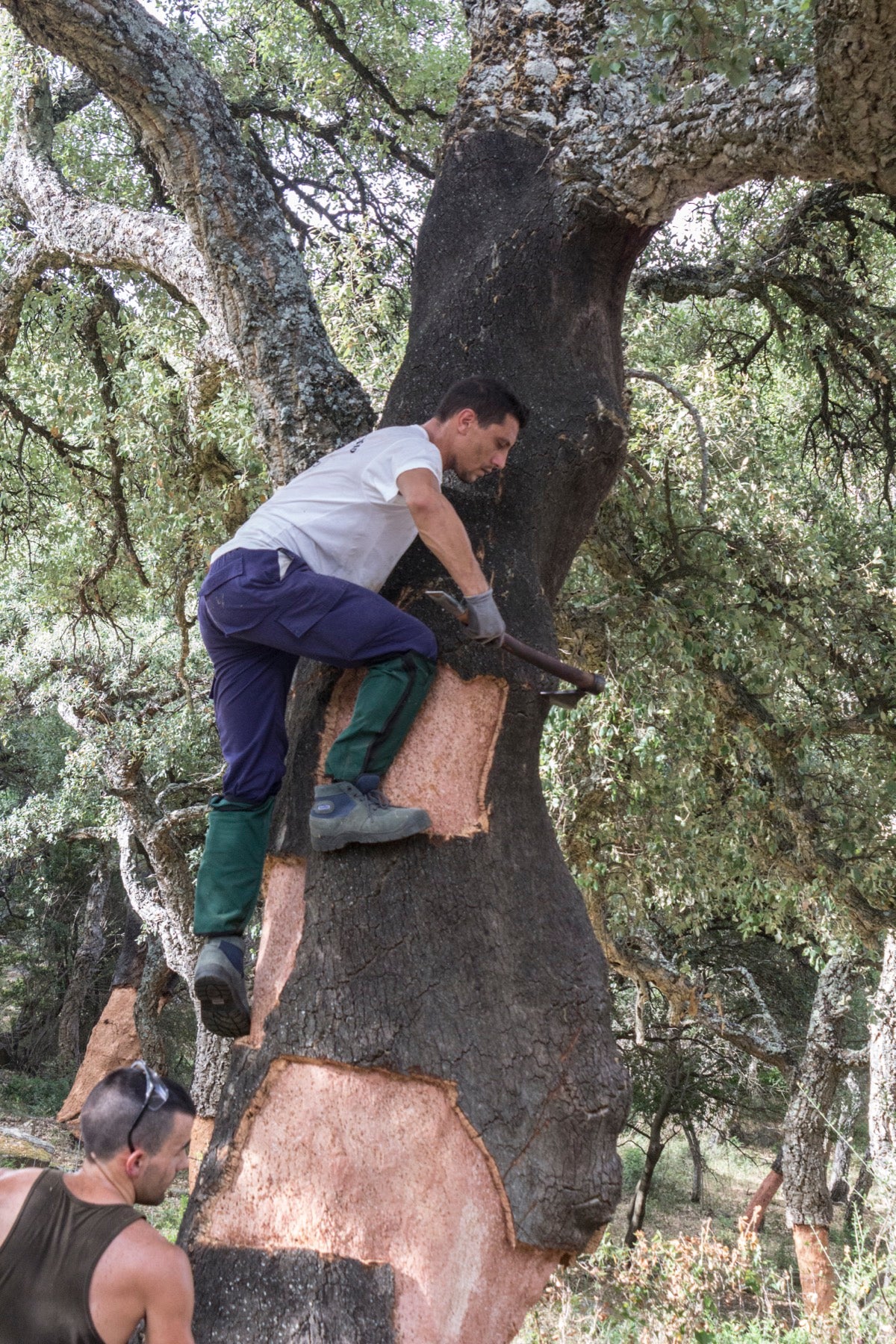
Cork comes from the outer bark of the cork oak. Harvesters remove this thick layer while the tree stays rooted and growing.
The first harvest takes patience: typically around 25 years. By then, the trunk must be large enough to harvest safely. This is a crop measured in decades.
The harvest in numbers
- trees felled to harvest cork
- 0
- Skilled hands remove the outer bark, leaving the cork oak standing.
- years between harvests
- 9+
- In Portugal, cork oaks have at least nine years to regrow their bark before the next harvest.
- years a cork oak can live
- 200
- One tree can provide cork across generations, renewing its bark through repeated harvests.
A skilled summer harvest
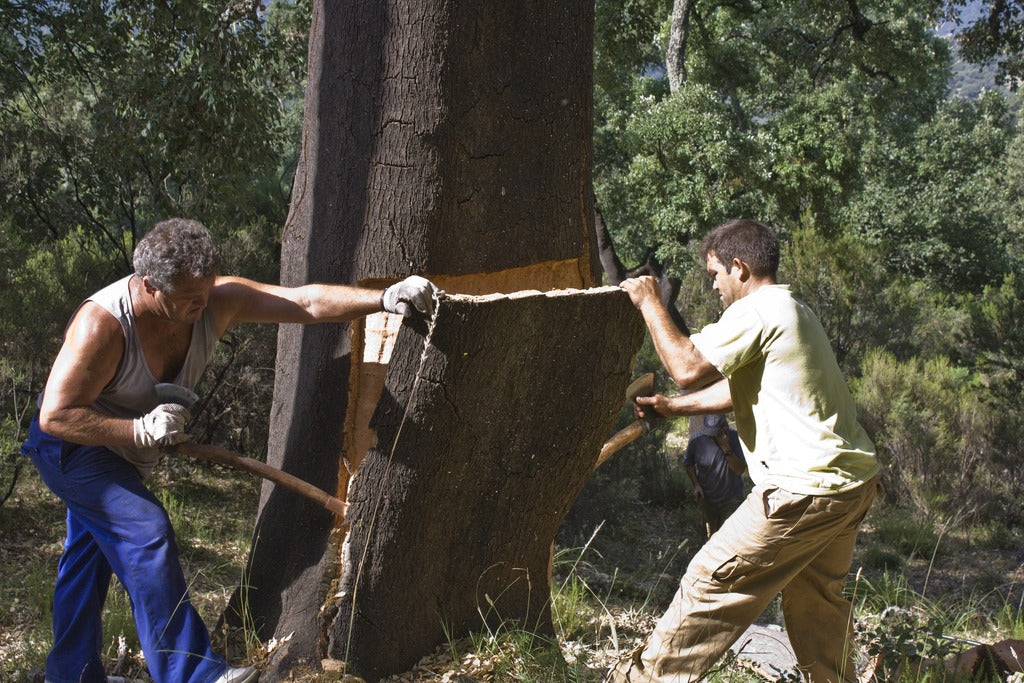
In late spring and summer, the bark separates more readily from the tree. Skilled harvesters work with an axe, opening the cork and easing it away in curved sheets.
The cut must be precise. Too deep, and it can damage the tree. Experience protects both the oak and the quality of the harvest.

Nine years between harvests
After harvesting, the tree begins rebuilding its bark. At least nine years pass before the next harvest, giving another substantial layer time to form.
A painted number records the harvest year on the trunk. With proper care, the same oak can supply cork repeatedly across generations of workers.
Why cork needs more markets
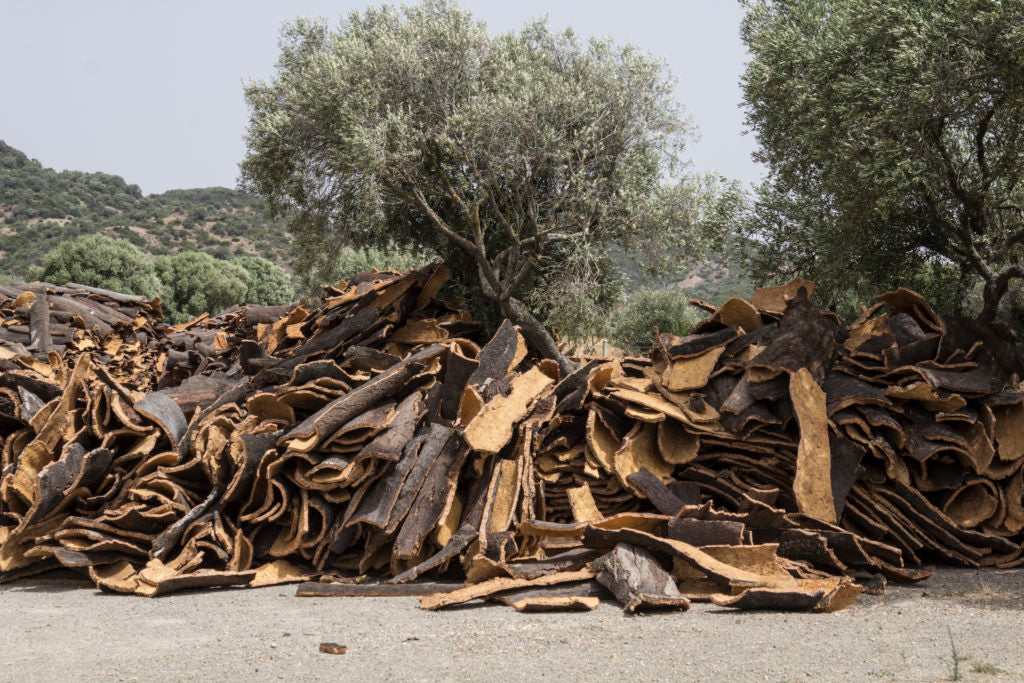
Wine stoppers underpin the cork business, but they cannot use every part of a harvest. Early bark is too irregular for natural stoppers; cutting stoppers from suitable planks leaves offcuts. Flooring, insulation, footwear and sports products give these materials commercial value.
Those wider markets matter to the industry’s long-term survival. They turn more of the harvest into income and reduce reliance on a single market. A cork yoga mat belongs to this broader economy: one that makes more use of the bark and strengthens the financial reason to keep cork oak forests standing.
The economics of conservation
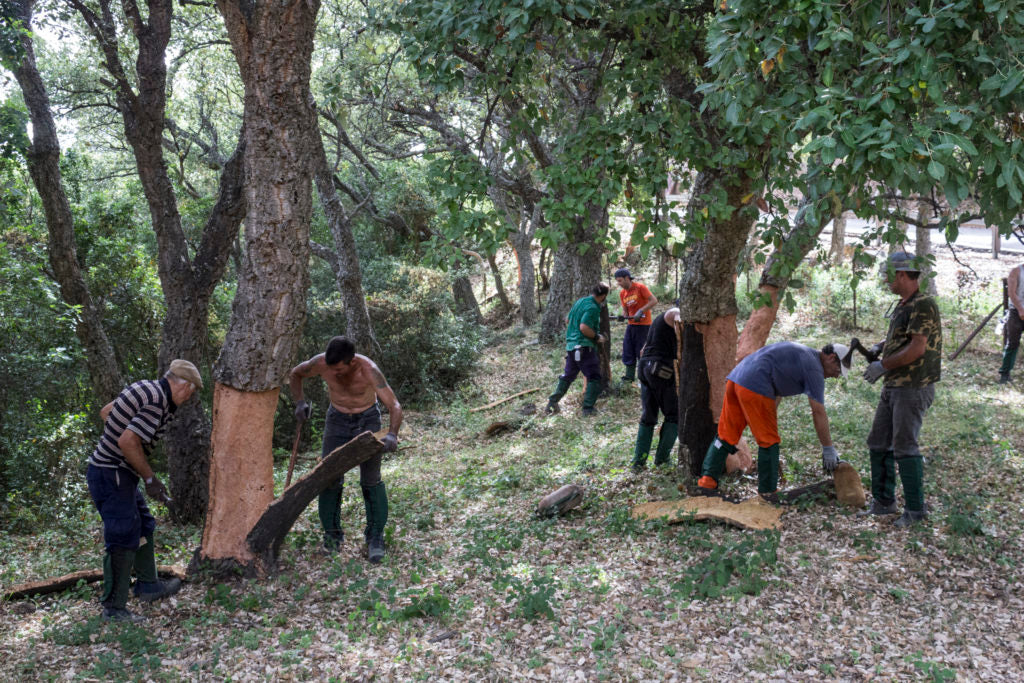
Portugal’s cork woodlands are working landscapes. Known as montados, their mix of trees, pasture and scrub supports wildlife alongside grazing, beekeeping and cork production.
Cork income helps make keeping and caring for these landscapes economically viable. Their survival also needs practical work: allowing young trees to establish, managing grazing and responding to drought, disease and fire. Healthy forests and a viable rural economy depend on each other.
-
Pro Cork Yoga Mat
Regular price From £68.00Regular priceUnit price per£79.00Sale price From £68.00 -
Large Cork Yoga Mat
Regular price From £44.50Regular priceUnit price per£85.00Sale price From £44.50 -
Balance Cork Yoga Mat
Regular price From £52.50Regular priceUnit price per£69.00Sale price From £52.50 -
Air Cork Yoga Mat
Regular price From £29.40Regular priceUnit price per£49.00Sale price From £29.40


Cork, explained
Are trees cut down for cork?
No. Harvesters remove the outer bark, leaving the tree standing. The cork grows back.
Does harvesting damage the tree?
Skilled harvesting allows the bark to regenerate. Poor cutting can injure the tree, which is why experience and timing matter.
Why wait nine years?
The bark needs time to rebuild. Harvesting too soon would interrupt that cycle and yield a thinner layer.
Where does Cork Space source its cork?
We source premium cork from Portugal, chosen for its quality finish and sustainable harvesting.
Sources and further reading
- APCOR: harvesting and cork grades
- Amorim: cork materials and applications
- WWF: cork markets and forests
- Research: cork, livelihoods and landscape care
- Amorim: recycling wine corks
- Víctor Gañán Pérez / © Instituto Andaluz del Patrimonio Histórico
CC BY 3.0 Spain · Cropped and resized.
- Eva Cote Montes / © Instituto Andaluz del Patrimonio Histórico
CC BY 3.0 Spain · Cropped and resized.
- Víctor Gañán Pérez / © Instituto Andaluz del Patrimonio Histórico
CC BY 3.0 Spain · Cropped and resized.
- Photo: Victor Gañán Pérez. © Instituto Andaluz del Patrimonio Histórico · CC BY 3.0 Spain · Cropped and resized.